Can Vitamin C Support Female Fertility? Egg Quality, Implantation and Beyond
How vitamin C supports egg quality, implantation and female fertility
Article
Posted on
Polycystic Ovary Syndrome (PCOS) is a common hormonal disorder among women of reproductive age. N-Acetylcysteine (NAC), a dietary supplement known for its antioxidant properties, is emerging as a topic of research interest for women with PCOS (PMOS), particularly in relation to insulin sensitivity, hormonal balance and ovulation.
An important update: On 12 May 2026, an international consensus published in The Lancet renamed Polycystic Ovary Syndrome (PCOS) to Polyendocrine Metabolic Ovarian Syndrome (PMOS). The new name reflects the condition's wider metabolic effects, including oxidative stress and insulin resistance, both of which are central to the research on NAC discussed in this article. Both names will be used during the transition to the 2028 ICD update. Read our explainer on what the rename means for your hormones and fertility.
Zita West NAC provides 600mg of N-Acetylcysteine per serving. It is available as a standalone supplement and is also included as part of the Zita West PCOS Support Pack alongside inositol, folate, omega-3, vitamin D and more.
Shop Zita West NAC Shop the PCOS Support PackPolycystic Ovary Syndrome (PCOS), now also referred to as Polyendocrine Metabolic Ovarian Syndrome (PMOS), is characterised by hormonal imbalance, irregular periods and in many cases the presence of multiple small follicles on the ovaries. It is one of the most common causes of fertility difficulties, affecting around 1 in 10 women of reproductive age in the UK.
Oxidative stress, insulin resistance and chronic low-grade inflammation are all associated with PCOS (PMOS) and are thought to contribute to its hormonal and reproductive effects. NAC addresses several of these mechanisms, which is why it has attracted growing research interest in this population.
NAC is a precursor to glutathione, the body's primary endogenous antioxidant. By supporting glutathione production, NAC may help reduce oxidative stress, which is elevated in women with PCOS (PMOS) and is thought to contribute to hormonal disruption, impaired ovulation and reduced egg quality.
A 2021 review published in Cureus highlighted oxidative stress as a key driver of PCOS pathology and identified antioxidant supplementation, including NAC, as a potential therapeutic approach worth further investigation.[1]
Insulin resistance is present in the majority of women with PCOS (PMOS) and is now central to the condition's new name. Research suggests NAC may support improved insulin sensitivity, potentially by reducing oxidative damage to insulin signalling pathways. A study published in the Journal of Clinical Endocrinology and Metabolism found that NAC supplementation improved insulin sensitivity in women with PCOS compared to placebo, though the authors noted that larger trials are needed to confirm these findings.[2]
PCOS (PMOS) is associated with elevated androgen levels, which may contribute to symptoms such as irregular cycles, acne and hirsutism. Some studies suggest NAC may support a reduction in androgen levels and help restore hormonal balance, potentially through its effects on insulin signalling and oxidative stress, though the evidence is not yet conclusive and individual responses vary.[1][2]
Irregular or absent ovulation is one of the primary fertility challenges associated with PCOS (PMOS). Research suggests NAC may support more regular ovulation and may also improve outcomes when used alongside fertility treatments. A randomised controlled trial published in Fertility and Sterility found that NAC used as an adjunct to clomiphene citrate improved ovulation and pregnancy rates in clomiphene-resistant women with PCOS compared to clomiphene alone.[3] More research is needed to establish optimal dosing and timing.
NAC is not found directly in foods, but it is a supplement form of the amino acid cysteine, which can be obtained from dietary sources. Foods that provide cysteine include:
Dietary cysteine provides a background level of support, but the doses used in PCOS research (typically 600mg per day or more) are not achievable through diet alone, which is why supplementation is generally the practical route for women looking to use NAC for PCOS (PMOS) management.
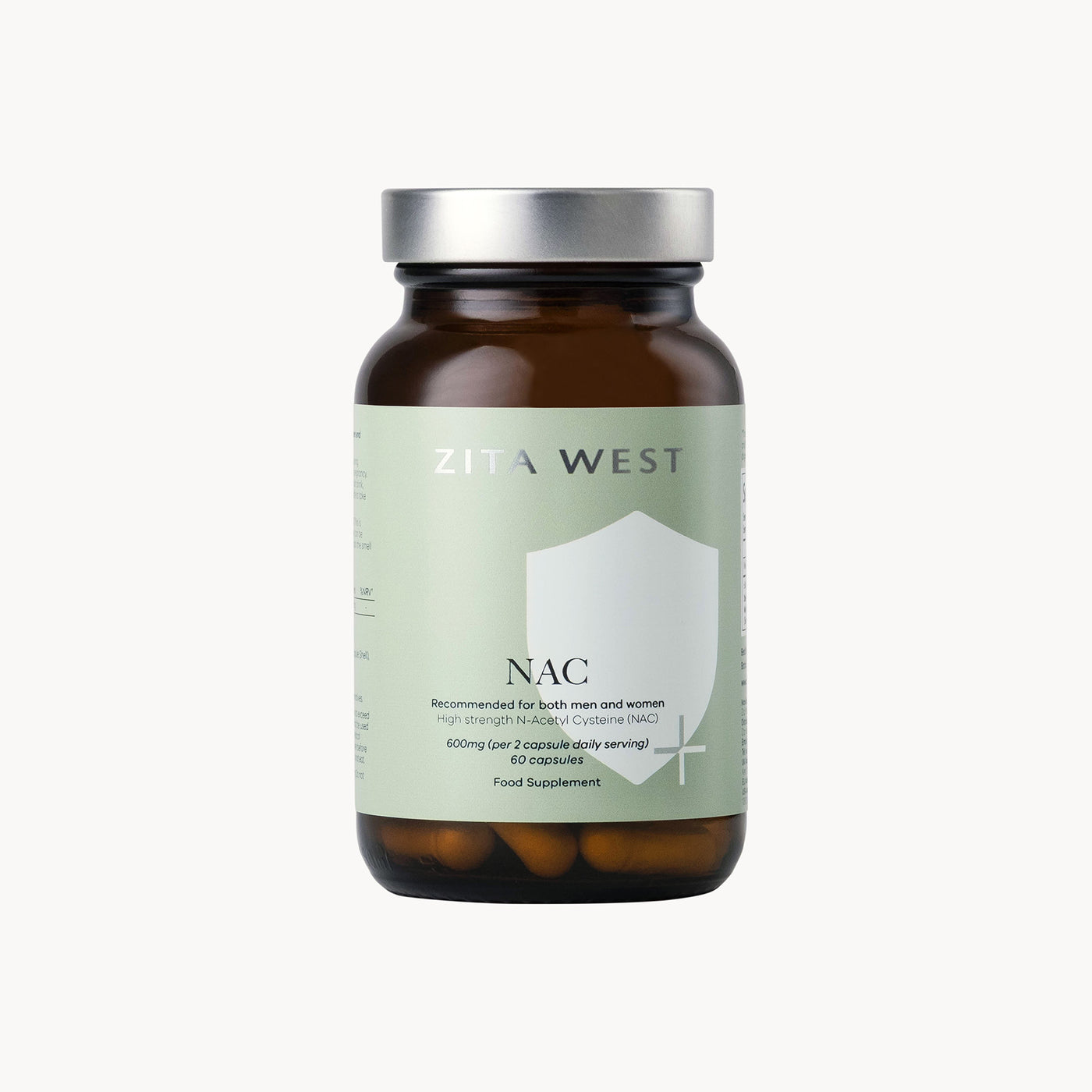
Each two capsule serving provides 600mg of NAC, the dose most commonly used in PCOS research. Designed to be taken alongside other fertility supplements as part of a broader support plan.
Shop Zita West NACNAC (N-Acetylcysteine) is a precursor to glutathione, the body's primary antioxidant. It is relevant to PCOS (PMOS) because oxidative stress and insulin resistance are both associated with the condition, and research suggests NAC may help address both of these mechanisms.
The doses used in PCOS research typically range from 600mg to 1800mg per day. Zita West NAC provides 600mg per serving (two capsules). Always consult a healthcare provider before starting any new supplement, particularly at higher doses.
Yes. NAC is generally considered compatible with other PCOS-relevant supplements including inositol, folate, omega-3 and vitamin D. The Zita West PCOS Support Pack includes NAC alongside these other nutrients in a single formulation. Always inform your healthcare provider of any supplements you are taking.
NAC is generally considered safe at the doses used in research. However, as with any supplement when trying to conceive, it is important to discuss use with a healthcare provider or fertility specialist to ensure it is appropriate for your individual situation.
PMOS (Polyendocrine Metabolic Ovarian Syndrome) is the new name for PCOS, adopted following an international consensus published in The Lancet in May 2026. The condition is the same but the new name better reflects its wider hormonal and metabolic effects. Read our full explainer on the rename.
External references: NHS: Polycystic ovary syndrome (PCOS) | The Lancet: PMOS consensus 2026
This content is for educational purposes only and is not intended to diagnose, treat, or replace medical advice. Always consult your healthcare provider before starting any new supplement, particularly if you have a hormonal condition such as PCOS (PMOS).

How vitamin C supports egg quality, implantation and female fertility

How vitamin C may support progesterone and luteal phase health

PCOS is now PMOS. Here is what the new name means for your hormones, fertility and wellbeing.