Preparing for IVF: What You Can Control & How to Prepare
Date: Monday 28th September 2026Time: 7:00PM (BST)Location: Online Sign up to the webinar here. About this webinar If you are...
Article
Written by The Zita West Team
Posted on
Fertility depends not only on hormones, but also on the health of individual cells. Eggs, sperm and early embryos are highly active, energy-dependent cells, and their function relies on healthy mitochondria, stable cell membranes and a balanced internal environment.
This is part of why choline for fertility, NAC and CoQ10 are so often discussed together in preconception nutrition. Choline is involved in cell membrane structure, methylation and early cellular development. NAC supports antioxidant pathways through glutathione production. CoQ10 is more directly linked with mitochondrial energy production.
Because eggs and sperm depend on cellular structure, energy production and oxidative stress balance, people frequently compare choline with CoQ10, or ask whether NAC and choline can be taken together. Understanding what each nutrient does, and how they differ, is useful before starting a preconception nutrition plan.
Short answer: Choline, NAC and CoQ10 support different but complementary aspects of cellular fertility health. Choline is involved in methylation, cell membrane structure, lipid metabolism and early cellular development. NAC supports antioxidant pathways through glutathione production. CoQ10 is more directly linked with mitochondrial energy production. They are not interchangeable, but they are often discussed together because eggs and sperm depend on healthy cellular function, energy production and oxidative stress balance.
Quick comparison:
For people trying to conceive, the key point is that these nutrients do different jobs. Choline supports cellular structure and methylation, NAC supports antioxidant pathways, and CoQ10 is more directly linked with mitochondrial energy production. A fertility nutrition plan may consider more than one of these nutrients, but they should not be treated as substitutes for one another.
A few quick definitions:
Zita West Choline provides 400mg of choline bitartrate per serving and is designed to support choline intake as part of a wider preconception nutrition plan. Choline is involved in methylation, cell membrane structure and early cellular development.
Shop Zita West Choline Book a free 1:1 consultationMitochondria are the energy-producing structures found in every cell of the body. They generate ATP, the primary energy currency that powers cellular processes, including egg maturation, sperm motility and the rapid cell divisions that characterise early embryo development.
Eggs in particular are among the most mitochondria-rich cells in the human body, and their energy requirements during development and fertilisation are significant. Research has linked mitochondrial function with age-related changes in oocyte quality, which is why mitochondrial health is often discussed in preconception nutrition, particularly in relation to CoQ10. However, nutrient support should be viewed as part of a wider personalised plan rather than a guaranteed way to change fertility outcomes.1
For sperm, mitochondrial function is equally important. Sperm motility depends directly on the ATP produced by mitochondria in the midpiece of the sperm cell. Impaired mitochondrial function has been associated with reduced sperm motility and increased DNA fragmentation.1
Choline is a water-soluble essential nutrient that was formally recognised by the US Institute of Medicine in 1998. It acts as a precursor to acetylcholine, a neurotransmitter involved in cell communication and muscle function. It is also a key component of phosphatidylcholine, the phospholipid that forms the structural basis of every cell membrane in the body, including the membranes of mitochondria themselves.
Beyond its structural roles, choline is a methyl donor, playing a central part in methylation pathways that regulate gene expression, DNA repair and cellular replication. These processes are directly relevant to the quality and viability of eggs, sperm and early embryos.2
Choline supports mitochondrial function indirectly, mainly by maintaining the membrane structure and lipid metabolism that mitochondria rely on to generate energy efficiently. It is not itself a direct energy-producing nutrient in the way CoQ10 is; rather, it supports the cellular environment mitochondria operate within. The connection between choline and mitochondria operates through several mechanisms:
Mitochondria have their own inner and outer membranes, and the integrity of these membranes is essential for efficient ATP production. Phosphatidylcholine, derived from choline, is a key structural component of mitochondrial membranes. When choline is insufficient, membrane integrity may be compromised, reducing the efficiency with which mitochondria generate energy.2
Choline is essential for the production of very-low-density lipoprotein (VLDL), which transports fats from the liver. Without adequate choline, fat accumulates in liver cells, impairing metabolic function and reducing the liver's capacity to support the hormonal and metabolic processes involved in reproduction. Healthy lipid metabolism also ensures that the fatty acids needed for mitochondrial energy production are available and transported efficiently.
Through its role as a methyl donor, choline supports DNA methylation, a process that regulates which genes are expressed in a cell. In reproductive cells, correct methylation patterns are essential for normal development. Inadequate choline may disrupt these patterns, affecting egg quality, embryo development and potentially early pregnancy outcomes.2

Considering choline as part of your preconception plan? Zita West Choline provides 400mg choline per daily serving and is designed to complement folate, DHA and wider fertility nutrition. It may be especially relevant where dietary choline intake is low or a standard prenatal contains little choline.
Shop nowCholine, NAC and CoQ10 are not interchangeable. Choline is more closely linked with cell membrane structure, methylation, lipid metabolism and early cellular development. NAC is more closely linked with antioxidant support through glutathione production. CoQ10 is more directly linked with mitochondrial energy production. They may complement each other because fertility depends on cellular structure, energy production and oxidative stress balance.
NAC (N-acetylcysteine) is another nutrient frequently discussed alongside choline and CoQ10 in fertility nutrition. All three are relevant to preconception cellular function, but they are not the same and they are not interchangeable.
CoQ10 (Coenzyme Q10) is perhaps the most well-researched mitochondrial support supplement for fertility, working directly within the mitochondrial electron transport chain to support ATP production. Choline and CoQ10 support cellular function through different but complementary mechanisms — CoQ10 supports energy generation directly, while choline supports the structural integrity and metabolic environment in which mitochondria operate.
For women over 35 in particular, where both CoQ10 levels and mitochondrial efficiency naturally decline with age, considering these nutrients as part of a preconception plan may be worth discussing with a healthcare provider. Read more in our guide to CoQ10 when trying to conceive.
Each nutrient plays a distinct role in egg and sperm cell biology, summarised below.
| Nutrient | Main role | Fertility relevance | Key point |
|---|---|---|---|
| Choline | Cell membranes, methylation, lipid metabolism, cell signalling | Egg and sperm cell structure, early cellular development, preconception nutrition | Supports cellular building blocks during the preconception window |
| NAC | Glutathione production and antioxidant pathways | Oxidative stress balance in the reproductive environment | Supports antioxidant pathways rather than replacing core fertility nutrients |
| CoQ10 | Mitochondrial energy production and antioxidant activity | Egg and sperm cellular energy | Often discussed where egg quality, sperm motility or age-related fertility factors are a focus |
| Folate | Methylation and early reproductive planning | Preconception and early pregnancy planning | Essential before pregnancy and not replaceable by choline, NAC or CoQ10 |
These nutrients have different roles and should be considered as part of a personalised preconception plan rather than as direct substitutes for one another. For more on folate specifically, see folate vs folic acid.
For a separate comparison of choline and inositol in fertility nutrition, read our guide to choline and inositol for fertility.
Choline, NAC and CoQ10 are not substitutes for folate, a balanced diet, medical advice or fertility treatment. They are nutrients that may support different aspects of preconception nutrition, but they should be considered within a personalised plan.
Mitochondria are especially important in fertility because eggs, sperm and early embryos are highly energy-dependent cells. Supporting cellular energy, membrane integrity and oxidative stress balance before conception may help create a healthier biological environment for reproductive cells.34
Of the nutrients discussed on this page, CoQ10 is the one most directly linked with mitochondrial energy production; choline and NAC support the surrounding cellular environment in different ways - choline through structure and methylation, and NAC through antioxidant pathways.

Zita West Kaneka Ubiquinol provides 200mg of bioavailable CoQ10 per daily serving and is designed to support mitochondrial energy production. It may be especially relevant where egg quality, sperm motility or age-related fertility factors are a focus.
Shop nowCholine is relevant to fertility because it supports the structure and function of cells. It contributes to phosphatidylcholine, a key component of cell membranes, and is involved in methylation pathways that influence DNA expression and normal cell division. These roles make choline relevant before conception and during early cellular development.56
Choline is also involved in acetylcholine production, relevant to cell signalling, and in lipid metabolism, which supports the transport of fats needed for healthy cell membranes. Together, these mechanisms are why choline is often discussed as part of preconception nutrition planning for both partners.
Diet is a practical place to start when reviewing choline intake. For guidance on how to get choline from food, including eggs, fish, dairy, soy and plant-based options, see our dedicated guide.
NAC is often discussed in fertility nutrition because it supports glutathione production, one of the body's key antioxidant pathways. Oxidative stress is relevant to reproductive health because eggs and sperm are sensitive to cellular stress, but NAC should be viewed as part of a wider nutrition and lifestyle plan rather than a standalone fertility treatment.78
A 2022 preclinical study found that NAC helped reduce oxidative stress and improve oocyte mitochondrial function in a mouse model, but this should not be presented as direct proof of improved human fertility outcomes.9
NAC is not the same as choline and does not do the same job. Choline is more closely linked with cell membranes and methylation, while NAC is more closely linked with antioxidant pathways through glutathione.
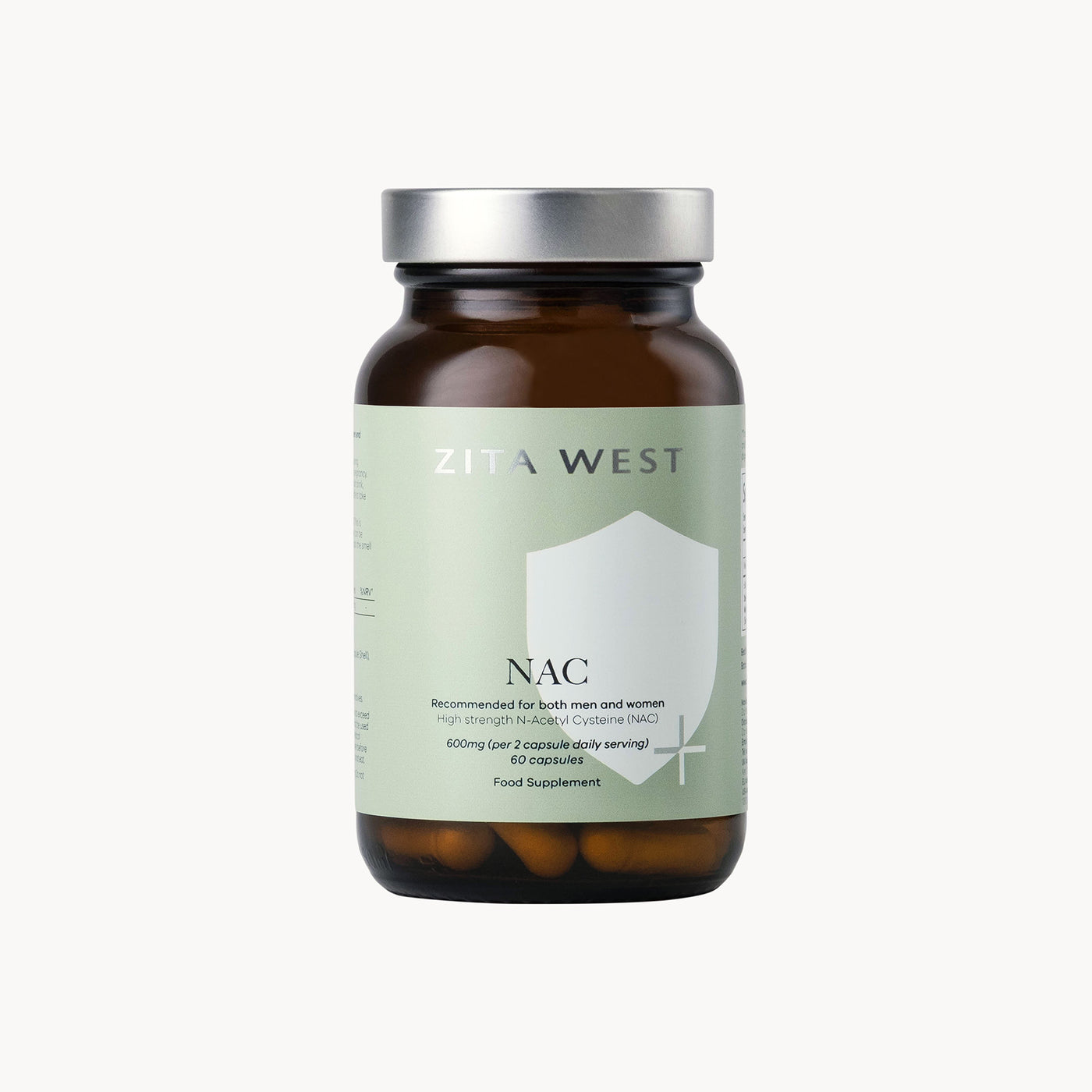
Zita West NAC provides 600mg N-acetylcysteine per daily serving and is designed to support antioxidant pathways through glutathione production. It may be especially relevant where oxidative stress balance is a focus, alongside choline and other cellular fertility nutrients.
Shop nowThe three-month preconception window matters because both egg and sperm cells are shaped by nutrition and lifestyle factors in the months before conception, not only from the point a pregnancy is confirmed. Sperm development takes roughly 70 to 90 days from start to finish, which means nutrition and lifestyle changes made in the months before trying to conceive may be reflected in the sperm available at conception. Egg maturation and the follicular environment are also influenced in the weeks before ovulation, even though the egg itself has been present since birth.
Because of this, preconception nutrition should ideally be reviewed around three months before trying to conceive, rather than only once a pregnancy test is positive. Both partners can use this window for nutrient optimisation, reviewing nutrition, lifestyle and supplement routines as part of a broader preconception nutrition programme, and choline intake before pregnancy may be relevant for both male and female partners during this time.
During this three-month window, it can also be useful to review other fertility nutrients before pregnancy, especially nutrients involved in methylation, antioxidant pathways, insulin signalling and cell membrane health.
You may want to review choline and cellular fertility support if:
Choline deficiency appears to be common, particularly among women of childbearing age who do not obtain enough through diet alone. Research from the UK and Europe suggests this gap is widespread. The European Food Safety Authority (EFSA) recommends 400mg per day for adult women, rising to 480mg during pregnancy. Most prenatal multivitamins provide only 50 to 250mg, leaving a significant gap that dietary sources and a dedicated supplement may help address.
Foods naturally high in choline include eggs (particularly the yolk), liver, fish, dairy, legumes and cruciferous vegetables. However, even with a varied diet, reaching 400mg daily consistently can be challenging, particularly for women who limit animal products.
Choline supports mitochondrial function primarily through its role in phosphatidylcholine synthesis, which maintains the integrity of mitochondrial membranes. It also supports lipid metabolism and methylation pathways that are important for cellular energy production and gene regulation in reproductive cells.
Yes. Eggs are among the most mitochondria-rich cells in the body and have significant energy requirements during development. Choline may support egg quality through its roles in mitochondrial membrane integrity, methylation and cellular structure, though the research in this specific area is still developing.
EFSA recommends 400mg per day for adult women, increasing during pregnancy. Most prenatal multivitamins provide significantly less than this. Zita West Choline provides 400mg per serving as choline bitartrate. Always consult your healthcare provider for guidance on the right dose for your situation.
No. Choline and CoQ10 are different nutrients with different roles. Choline is more closely linked with cell membrane structure, methylation and early cellular development, while CoQ10 is more directly involved in mitochondrial energy production.
Choline supports cell membrane structure, methylation and early cellular development. NAC supports antioxidant pathways through glutathione production. They are not interchangeable, but both are often discussed in fertility nutrition because reproductive cells are sensitive to cellular structure and oxidative stress balance.
Not directly. Choline is more closely linked with cell membrane structure, methylation and early cellular development, and may support the wider cellular environment in which mitochondria operate. CoQ10 is the nutrient most directly involved in mitochondrial energy production.
CoQ10 is the nutrient most directly involved in mitochondrial energy production because it works within the mitochondrial electron transport chain. Choline and NAC support different surrounding pathways: choline is involved in cell membrane structure and methylation, while NAC supports glutathione production and oxidative stress balance. They may sit together in a broader preconception nutrition plan, but they are not interchangeable.
Choline and CoQ10 support different pathways and may be considered together as part of a broader preconception nutrition plan. They are not substitutes for one another, and anyone pregnant, breastfeeding, taking medication or undergoing fertility treatment should discuss supplement combinations with a healthcare practitioner.
Choline and NAC support different pathways, choline through cell membranes and methylation, and NAC through antioxidant pathways, so they may sit together in a broader preconception plan. As with any supplement combination, it is worth reviewing with a healthcare practitioner, particularly during fertility treatment or pregnancy.
No. NAC is more closely linked with antioxidant support through glutathione production, while CoQ10 is more directly involved in mitochondrial energy production. Both are sometimes discussed in fertility nutrition, but they work through different mechanisms.
There is no single nutrient that is universally "better", as choline, NAC and CoQ10 support different aspects of cell structure, energy production and oxidative stress balance. Choline is relevant to cell structure and methylation, NAC to antioxidant balance, and CoQ10 to mitochondrial energy production, so a fertility nutrition plan may reasonably consider more than one rather than choosing between them.
External references: EFSA: Dietary Reference Values for choline
This content is for educational purposes only and is not intended to diagnose, treat, or replace medical advice. Always consult your healthcare provider before starting any new supplement.


Inside Vitafem: Continuing our heritage of evolving with the latest clinical evidence to set a new standard for female fertility formulas.