1st Trimester Essentials
Last reviewed: August 2026 In the first trimester, the key nutrients recommended in the UK are active folate (400mcg), vitamin...
YOUR CART IS EMPTY
 Third-Party Tested

Choline
£17.95
Capsule

Femceive
£34.95
Capsule

Vital DHA
£20.50
Capsule

Vitamin D Spray
£13.50
Spray
Third-Party Tested
Article
Posted on
CoQ10 is well-supported for use when trying to conceive, but current guidance recommends stopping once pregnancy is confirmed. There is insufficient large-scale evidence on its safety throughout pregnancy. If you have been taking CoQ10 pre-conception, there is no cause for concern, simply stop at a positive test and transition to a trimester-specific supplement. We always recommend speaking to your healthcare practitioner before starting any new supplement.
CoQ10 is widely used during the conception phase to support fertility and egg quality. But what about once you are pregnant? Whilst there is some evidence that taking a CoQ10 supplement may be beneficial when it comes to reducing the risk of pre-eclampsia, there is insufficient research on its general safety throughout pregnancy. This guide explains the science behind CoQ10 in pregnancy and the advice from Zita West.
If you have just found out you are pregnant and are wondering what to take instead of CoQ10, Zita West Vital Essence 1 is specifically formulated for the first trimester, covering folate, magnesium, zinc and the key nutrients your baby needs in the earliest weeks.
Shop Vital Essence 1 Book a free 1:1 consultationCoenzyme Q10 (CoQ10) plays two key roles: it helps generate cellular energy and shields cells from oxidative stress. Research shows CoQ10 supports egg health, especially in women over 35, and may enhance fertility success.1 For a full guide to CoQ10 dosage when trying to conceive, read our dosage guide here.
A 2009 randomised controlled trial involving women at risk of pre-eclampsia found that 200mg of CoQ10 daily from week 20 until delivery significantly reduced the risk of pre-eclampsia (14.4% vs 25.6% in the placebo group).2 While promising, this focused solely on pre-eclampsia in at-risk women, not overall pregnancy safety.
Leading health authorities, including the Mayo Clinic and the National Center for Complementary and Integrative Health, highlight that there is not enough large-scale human data to establish CoQ10 safety during pregnancy and breastfeeding, advising against routine use unless supervised by a healthcare provider.3,4
Once pregnancy is confirmed, the focus shifts from fertility support to ensuring your body and your baby have the nutrients needed for healthy development. The three most important areas to cover in the first trimester are folate, vitamin D and omega-3.
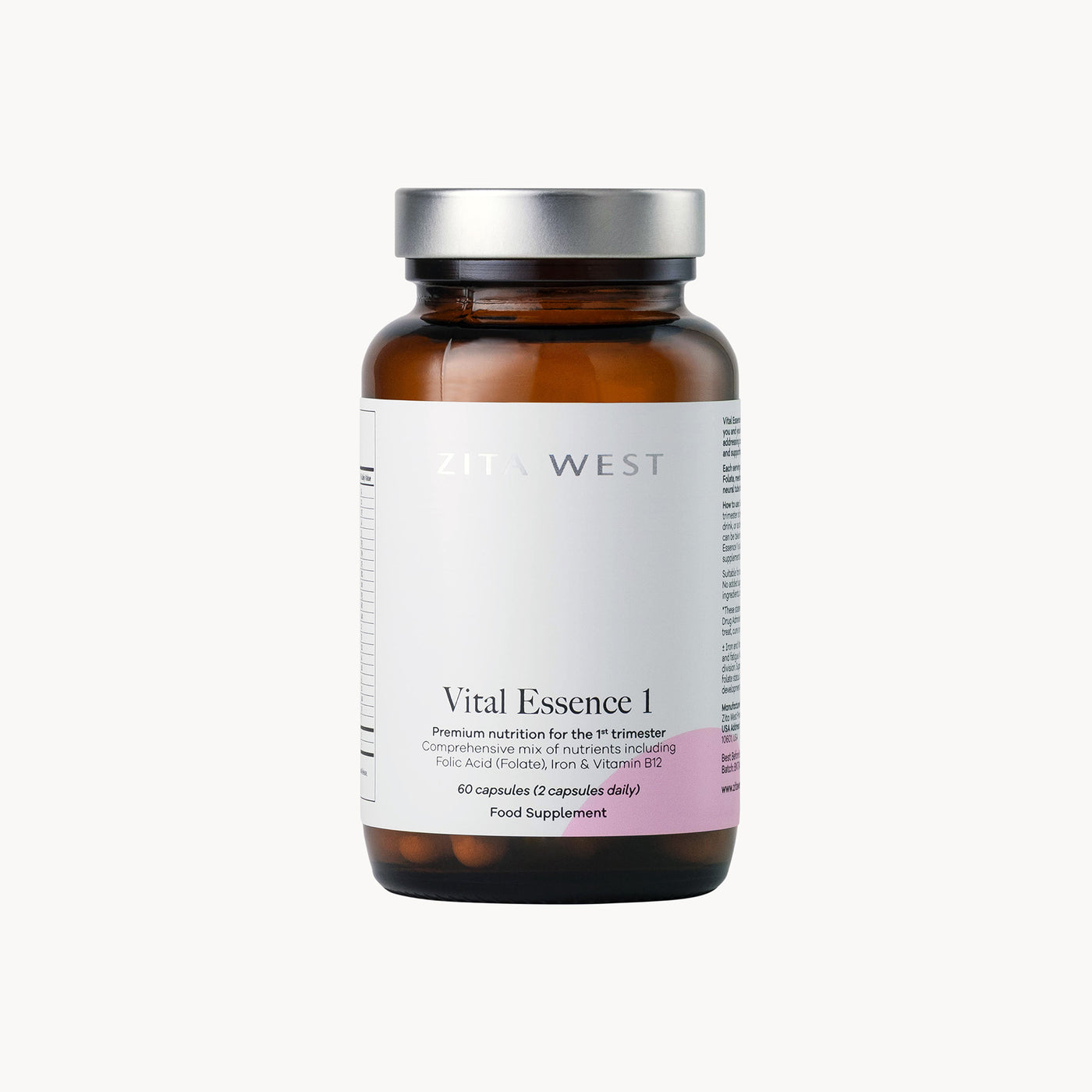
Specifically formulated for the first trimester, covering the key nutrients your body needs from the moment pregnancy is confirmed, including bioavailable folate, magnesium and zinc.
Shop Vital Essence 1Alongside Vital Essence 1, we recommend continuing with vitamin D and omega-3 throughout pregnancy. Both are well-evidenced for pregnancy safety and support immune function, brain development and placental health respectively.
Many women take CoQ10 up until they see a positive pregnancy test. If that is you, there is no cause for concern. CoQ10 has a large safety margin and there are no known harmful effects at standard pre-conception doses of 200mg per day. Once pregnancy is confirmed, simply stop taking CoQ10 and transition to your trimester 1 supplements.

Brings together Vital Essence 1, Vitamin D and Vital DHA in one place, covering the full nutritional picture for early pregnancy.
Shop the Trimester 1 Pack Book a free 1:1 consultationWe recommend taking 200mg of Zita West Kaneka Ubiquinol CoQ10 per day while trying to conceive. Once pregnancy is confirmed, we advise stopping CoQ10 and transitioning to our carefully formulated pregnancy supplements, starting with Vital Essence 1 for the first trimester.
There is not enough clinical evidence to confirm safety during pregnancy. The general recommendation is to stop taking CoQ10 once you are pregnant, unless advised otherwise by your healthcare provider. Vital Essence 1 is our recommended first trimester supplement to transition to once pregnancy is confirmed.
There are no known harmful effects at common pre-conception doses of 200mg per day. However, long-term safety data during pregnancy is still limited, which is why current guidance is to stop once pregnancy is confirmed.
A small study found 200mg CoQ10 daily from week 20 reduced pre-eclampsia risk in at-risk women, but further large trials are needed before it can be widely recommended during pregnancy.2
Once you receive a positive pregnancy test, stop taking CoQ10 unless your doctor advises otherwise. Switch to prenatal supplements that are widely accepted for pregnancy use, starting with Vital Essence 1 for trimester 1 support.
The key nutrients to prioritise in the first trimester are bioavailable folate, vitamin D, omega-3 and magnesium. The Zita West Newly Pregnant Trimester 1 Support Pack covers all of these in one place. If you are unsure which products are right for your situation, book a free 1:1 fertility product consultation with our team.
This content is for educational purposes only and is not intended to diagnose, treat, or replace medical advice. Always consult your healthcare provider before starting or discontinuing any supplement during pregnancy.