Preparing for IVF: What You Can Control & How to Prepare
Date: Monday 28th September 2026Time: 7:00PM (BST)Location: Online Sign up to the webinar here. About this webinar If you are...
Article
Written by The Zita West Team
Posted on
Male factors contribute to a significant proportion of fertility difficulties, alongside female factors, and sperm health can be influenced by nutrition, weight, smoking, alcohol, oxidative stress and other lifestyle factors. Food cannot guarantee fertility outcomes, but a nutrient-rich diet may support sperm production and sperm quality as part of a wider approach.
This guide focuses on the foods and nutrients most often discussed in relation to sperm count, motility, morphology and protection from oxidative stress. For a broader guide to sperm count, motility, morphology, DNA fragmentation and lifestyle factors, read our full guide to male fertility issues.
The best foods for male fertility are foods rich in zinc, omega-3 fatty acids, folate, vitamin D, vitamin E, selenium, protein and antioxidants. These nutrients may support sperm production, motility, morphology and protection from oxidative stress. Useful foods include oysters, walnuts, leafy greens, oily fish, eggs, dark chocolate and pomegranates, alongside a balanced Mediterranean-style diet.
Because sperm development takes around 72 to 90 days, dietary changes are usually best started at least three months before trying to conceive, and are best viewed as part of a wider, consistent approach rather than a quick fix.
Sperm production is continuous, but each development cycle takes roughly 72 to 90 days. Nutrients are involved in sperm production, hormone function, cell membranes, energy production and antioxidant protection throughout that cycle.
Oxidative stress is one of the factors associated with sperm quality issues. Oxidative stress happens when there is an imbalance between free radicals and antioxidants in the body, and sperm cells are particularly sensitive to this kind of damage.
Overall dietary pattern tends to matter more than any single food. A Mediterranean-style dietary pattern is often used as a helpful reference point because it emphasises vegetables, fruit, oily fish, nuts, seeds, legumes, wholegrains and olive oil.
Nutrition may support:
If you are trying to understand sperm count, motility, morphology or DNA fragmentation in more detail, our male fertility issues guide explains how these measures are assessed and what can affect them.
Several nutrients are commonly discussed in relation to sperm health. Ideally these come from a varied diet first, with supplements considered where appropriate to fill any gaps.
More of any one nutrient is not automatically better. The priority is a varied diet, appropriate supplementation where needed, and consistency across the preconception window.

Oysters are one of the richest dietary sources of zinc. Zinc is involved in normal fertility, testosterone production and sperm production, and some research has linked zinc deficiency with poorer sperm parameters.
Oysters aren't the only route to zinc, and not everyone eats shellfish. Good alternatives include beef, lamb, pumpkin seeds, sesame seeds, lentils, chickpeas and beans, which can be added to salads, stir-fries or simply eaten as a snack.
It's worth being clear about what this does and doesn't mean: eating oysters won't directly increase testosterone or sperm count on its own. Zinc is one nutrient among several involved in the wider process of sperm production, and its relevance depends on whether someone's diet is otherwise low in it.

Walnuts provide plant-based omega-3 fats, antioxidants and polyphenols. Omega-3s are relevant to sperm cell membrane structure, which is one reason walnuts come up often in fertility nutrition discussions.
A 12-week study of walnuts found changes in sperm vitality, motility and morphology in healthy young men eating 75g of walnuts daily. This is a genuinely interesting finding, but it's a single study in a specific population, so it's sensible to view it as supportive evidence rather than proof that walnuts will improve sperm parameters for everyone.
Walnuts are easy to add to porridge, yoghurt or salads, or eaten as a snack on their own. If walnuts aren't for you, chia seeds, flaxseed, pumpkin seeds and almonds offer a similar nutritional profile.

Spinach, kale, broccoli, rocket and chard are useful sources of folate. Folate is involved in DNA synthesis and cell division, which may be relevant to sperm development because sperm cells divide and mature rapidly throughout the roughly 72 to 90 day production cycle.
Folate doesn't work in isolation; it's generally discussed alongside other nutrients, including vitamin B12 and zinc, as part of the wider nutritional picture for sperm development.
Leafy greens are easy to add to eggs, soups, smoothies, stir-fries or side dishes. If leafy greens aren't a regular feature of your diet, asparagus, Brussels sprouts, beans, lentils and avocado are useful alternatives.

Salmon, sardines, mackerel and trout are useful sources of omega-3 fats, particularly DHA and EPA, which are important for cell membranes throughout the body, including sperm cells. These fish are also a useful source of vitamin D.
Vitamin D has been studied in relation to sperm motility and testosterone, though the evidence base is still developing. Vitamin D status can be a genuine concern in the UK, particularly in autumn and winter when sunlight exposure is lower.
Aiming for oily fish as part of a balanced diet, in line with NHS guidance, is a reasonable and practical target. For those who don't eat fish, algae-based omega-3 supplements, walnuts, chia and flax are useful alternatives, though it's worth knowing that plant-based omega-3 is not chemically the same as the DHA and EPA found in fish.

Eggs provide high-quality protein, choline, B vitamins and vitamin E. Choline is involved in cell membrane structure, and protein and B vitamins support general reproductive health and energy metabolism.
Vitamin E research in this area is still developing, and it would be overstating things to say vitamin E supplementation guarantees better IVF outcomes; findings vary between studies and individuals, and any decisions around fertility treatment should be made with your clinical team.
Eggs are practical and accessible: boiled eggs, omelettes, eggs with spinach, or eggs on wholegrain toast are all straightforward ways to include them. Poultry, Greek yoghurt, tofu, legumes and fish are useful alternatives if eggs aren't suitable for you.

High-cocoa dark chocolate contains polyphenols, and some varieties also contain the amino acid L-arginine. These compounds are relevant to antioxidant intake and general nutrition, which may be one reason dark chocolate and sperm health is a well-searched topic.
It's worth being careful here, because claims about dark chocolate and sperm count can easily become exaggerated. People often search for dark chocolate and sperm count, but it's better to think of dark chocolate as a source of polyphenols rather than a treatment for low sperm count.
A sensible approach is to choose chocolate with 70% cocoa content or above, and to enjoy it in small amounts as part of a wider, varied diet rather than as a fertility strategy in its own right.

Pomegranates are a rich source of polyphenols, including punicalagins and ellagic acid. Antioxidant-rich foods like this may help support the body's defences against oxidative stress, which is relevant to sperm health more broadly.
Much of the research specifically on pomegranates and sperm quality is preclinical or based on animal models, so it's important not to overstate what this means for human fertility. Human evidence in this specific area is still limited.
Pomegranate seeds are a simple addition to yoghurt, porridge, salads or smoothies. Berries, cherries, citrus fruit, colourful vegetables and green tea offer similar antioxidant benefits if pomegranate isn't something you eat regularly.
This is an example of how the foods and nutrients above might come together over a day. It's an illustration, not a prescribed fertility meal plan, and it combines zinc, omega-3, folate, antioxidants and protein across the day.
The aim is consistency across the 72 to 90 day sperm development window, rather than relying on any one individual food.
Food is the foundation of sperm health, and for many men a varied, nutrient-rich diet is enough on its own. Supplements may help address nutritional gaps that are harder to close through food alone, and some men consider targeted supplementation during the preconception window. Personalised advice can be useful, particularly after a semen analysis or when preparing for fertility treatment.
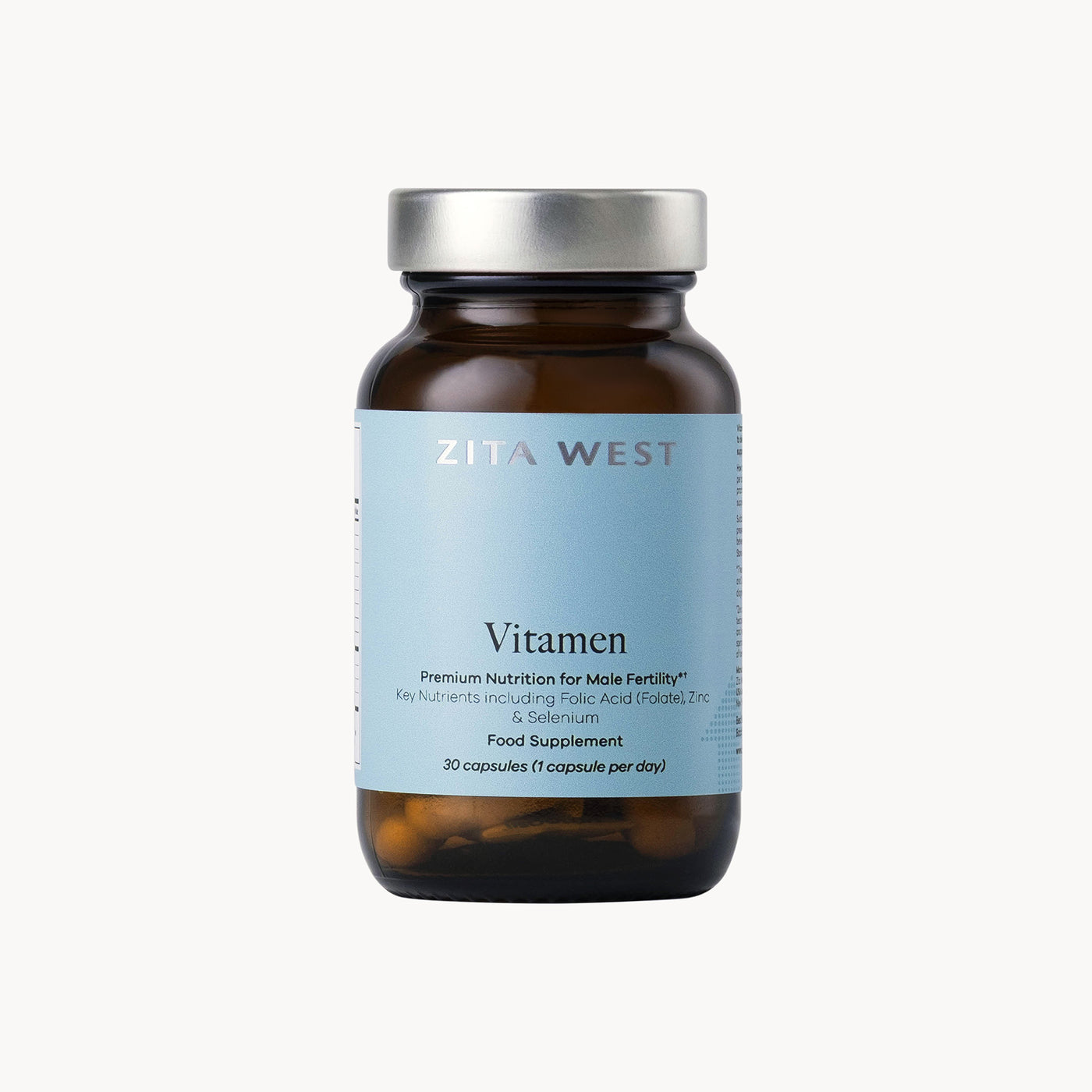
A comprehensive male preconception multivitamin containing zinc, folate, CoQ10, vitamin D, selenium and other nutrients commonly considered during preconception planning for men.
Shop Zita West Vitamen
CoQ10 is involved in mitochondrial energy production and has been studied in relation to sperm motility. Kaneka Ubiquinol provides CoQ10 in its active ubiquinol form, and can be considered as part of a wider preconception nutrition plan.
Shop Kaneka Ubiquinol CoQ10
Provides omega-3 fatty acids, including DHA and EPA, which are relevant to cell membrane structure and general preconception nutrition.
Shop Vital DHAIf you're unsure which nutrients are relevant to your situation, a free 1:1 fertility product consultation with the Zita West team can help you work out where to start.
Diet sits alongside several other lifestyle factors that may support sperm health:
CoQ10 is one nutrient that comes up frequently in discussions of sperm energy and motility. For more detail, see our guide to CoQ10 and male fertility.
Oysters, walnuts, leafy greens, oily fish, eggs, dark chocolate and pomegranates are among the most discussed foods for male fertility. Between them, they provide zinc, omega-3, folate, vitamin D, vitamin E, protein, choline and antioxidants, nutrients that may support sperm production, motility, morphology and protection from oxidative stress.
Zinc-rich foods such as oysters, beef, pumpkin seeds, sesame seeds, lentils and chickpeas; folate-rich foods such as leafy greens, beans, lentils and asparagus; protein-rich foods such as eggs, fish, poultry, yoghurt, tofu and legumes; and antioxidant-rich foods such as berries, pomegranates, citrus fruit, colourful vegetables and high-cocoa dark chocolate are all commonly discussed in relation to sperm count. These foods may support the nutritional foundations involved in sperm production, but they should not be seen as a treatment for low sperm count.
Sperm development takes roughly 72 to 90 days, so dietary and lifestyle changes are usually best started at least three months before trying to conceive. Changes should be kept consistent rather than relying on one individual food. Anyone with concerns about sperm count, motility or morphology should speak to a GP, fertility specialist or qualified nutrition practitioner.
Walnuts provide plant-based omega-3 fats, antioxidants and polyphenols, which may be relevant to sperm cell membrane health and protection from oxidative stress. A 12-week walnut study found changes in sperm vitality, motility and morphology in healthy young men, though more research is needed before making strong claims for a wider population.
Oysters are rich in zinc, which is involved in normal fertility, testosterone production and sperm production. They aren't essential, though: people who don't eat shellfish can get zinc from beef, lamb, pumpkin seeds, sesame seeds, beans, lentils and chickpeas. Oysters shouldn't be treated as a fertility treatment in themselves.
Dark chocolate contains polyphenols and may contain L-arginine, both relevant to antioxidant intake and general nutrition. High-cocoa dark chocolate, around 70% or above, can be included in small amounts as part of a balanced diet. People often search for dark chocolate and sperm count, but dark chocolate is better understood as a source of polyphenols rather than a treatment for low sperm count.
Zinc, folate, omega-3 fatty acids, vitamin D, vitamin E, selenium, CoQ10 and antioxidants are the nutrients most often discussed in relation to male fertility. Together, they're involved in sperm production, cell membrane structure, antioxidant protection, mitochondrial energy production and general reproductive health.
Sperm motility is influenced by many factors, including oxidative stress, inflammation, lifestyle, heat exposure, smoking, alcohol, weight and underlying medical issues. A nutrient-rich diet may help support the biological processes involved in motility, and omega-3 fats, CoQ10, antioxidants, selenium and vitamin D are commonly discussed in this context. Diet should be part of a wider fertility plan, not a replacement for clinical assessment.
Supplements aren't always necessary, but they may help address nutrient gaps. Men preparing for conception often consider nutrients such as zinc, folate, selenium, vitamin D, omega-3 and CoQ10, ideally alongside a healthy diet and lifestyle rather than instead of one. Zita West Vitamen covers many of these nutrients in a single daily supplement, and personalised advice, including a free 1:1 fertility product consultation, can be useful, especially after a semen analysis or before fertility treatment.
This content is for educational purposes only and is not intended to diagnose, treat or replace medical advice. If you are concerned about fertility, sperm count, motility, morphology or DNA fragmentation, speak to your GP, fertility clinic or a qualified healthcare professional before making changes to supplements or treatment.


Inside Vitafem: Continuing our heritage of evolving with the latest clinical evidence to set a new standard for female fertility formulas.